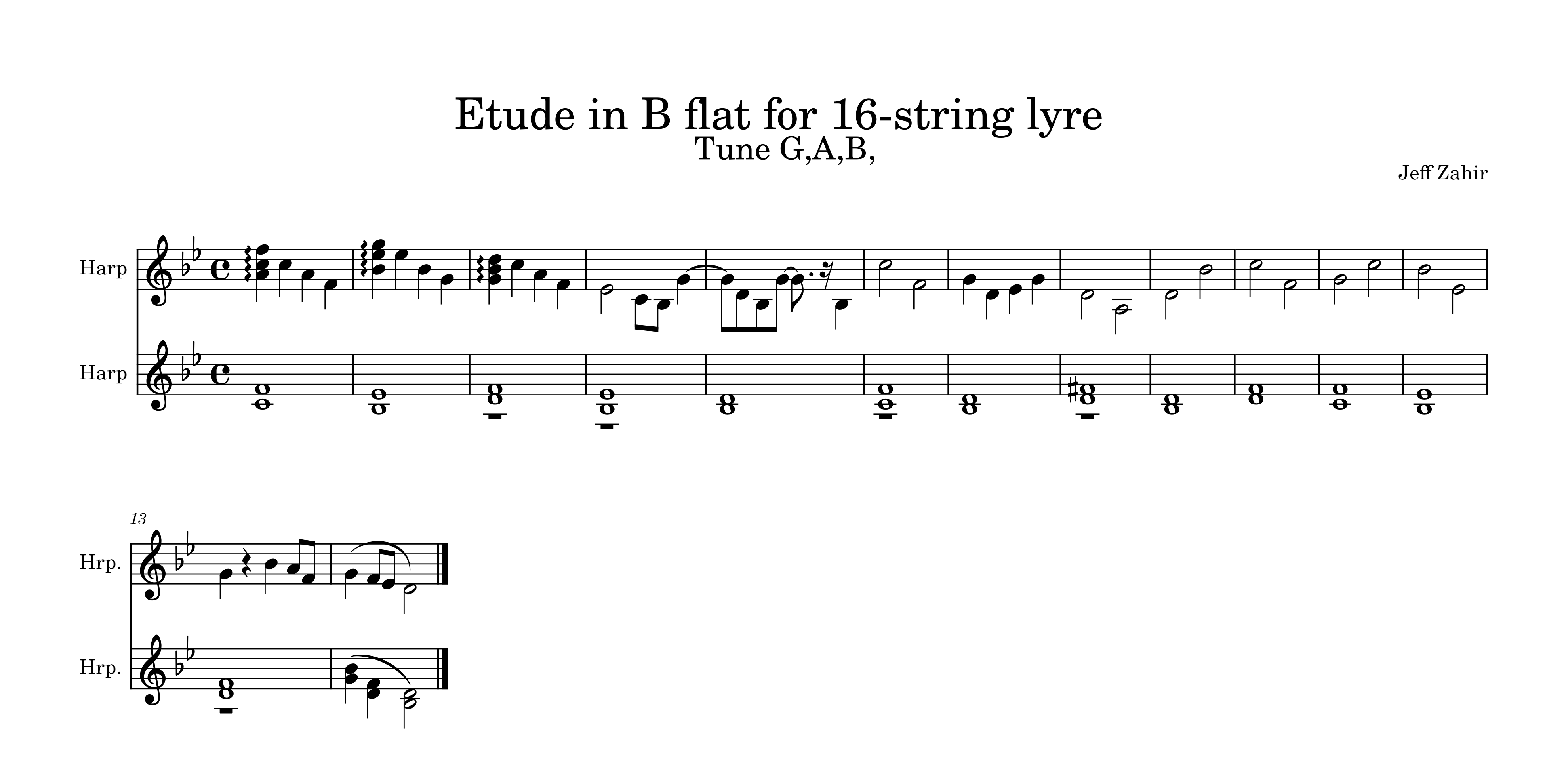
The main theme uses Orpheus’ Lyre. It starts in B flat major then changes to darker modes as he gets closer to Hades.
Scene when Orpheus is on the shore of the river Styx and sees Charon’s boat approaching through the mist over the river.
Scene when Orpheus enters Hades’ temple and we see Hades on his throne reading prayers of the deceased that were burned on funeral pyres. On each side of the throne is a brazier; one for “Granted” and the other for “Denied”. Shadows flow over the floor’s surface until they reach the lit area around Hades. From the shadows, long arms shrouded in floor-length dark sleeves rise with the prayers on paper and hand them to Hades. The first cresendo is when we see Hades and the second for when he decides and tosses the paper into one of the braziers.
I wrote a script in October, 2024 about the Greek legend of Orpheus and Eurydice based on Virgil translated from the Latin.
Logline:
Scion of Apollo Orpheus and a water nymph Eurydice are celebrating the first day of Spring with friends in a glen when Eurydice dies from a snake bite. Orpheus travels to Hades to retrieve his bride and is thwarted by Hades’ wife Persephone and his own hubris.
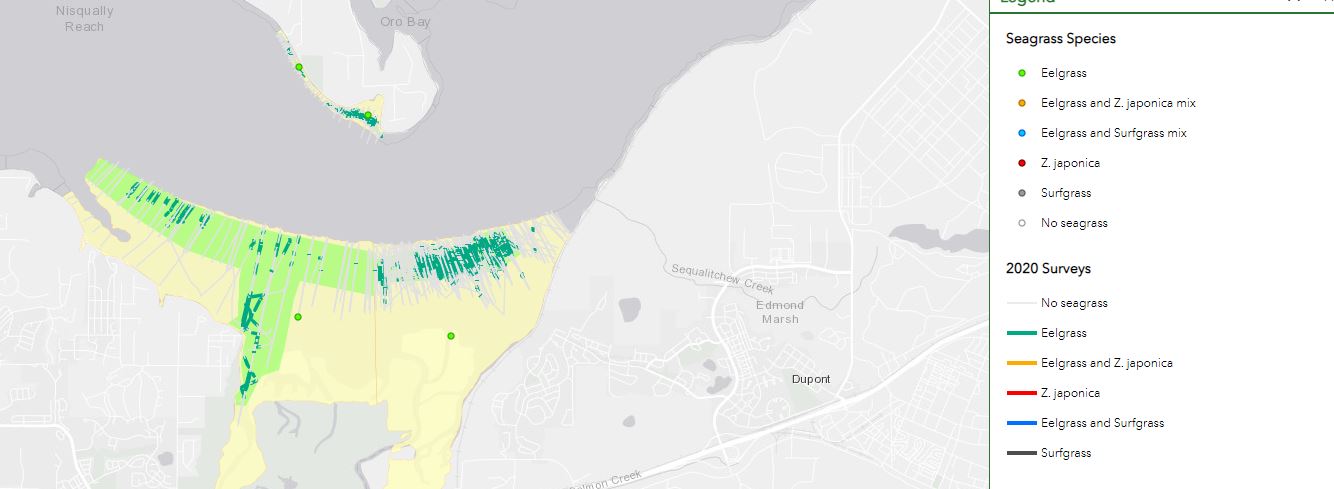
I live 3 miles away from a boat launch on the very southern tip of Puget Sound. The launch is adjacent to seagrass meadows that are the subject of my investigations.
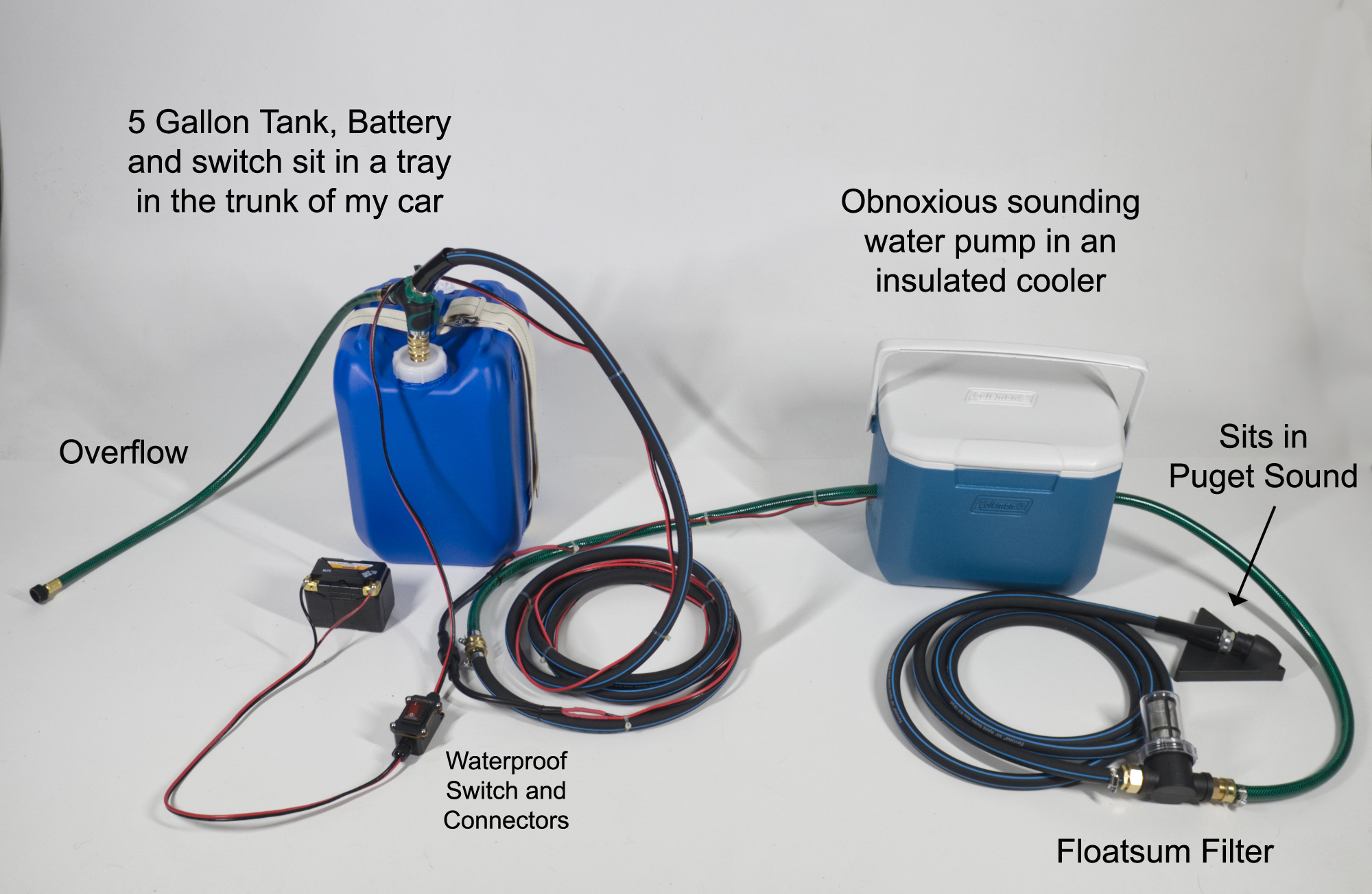
In order to get the same sea water as the meadows, I built this system for pumping 5 gallons of sea water into a tank that’s strapped into the back of my Volkswagon Beetle. The setup should take no more than 5 minutes and the pump is advertised to pump 1 Gallon per minute.
I’ll collect water at high tide but I’m worried about clogging the pump so I’ve installed a filter along the hose leading to the pump’s intake and I’ll probably fasten a Whiffle Ball to the business-end of the intake hose.
Once I’ve sterilized the tanks and everything that will come in contact with it, I’ll need to sterilize the sea water I’ve collected from Puget Sound.
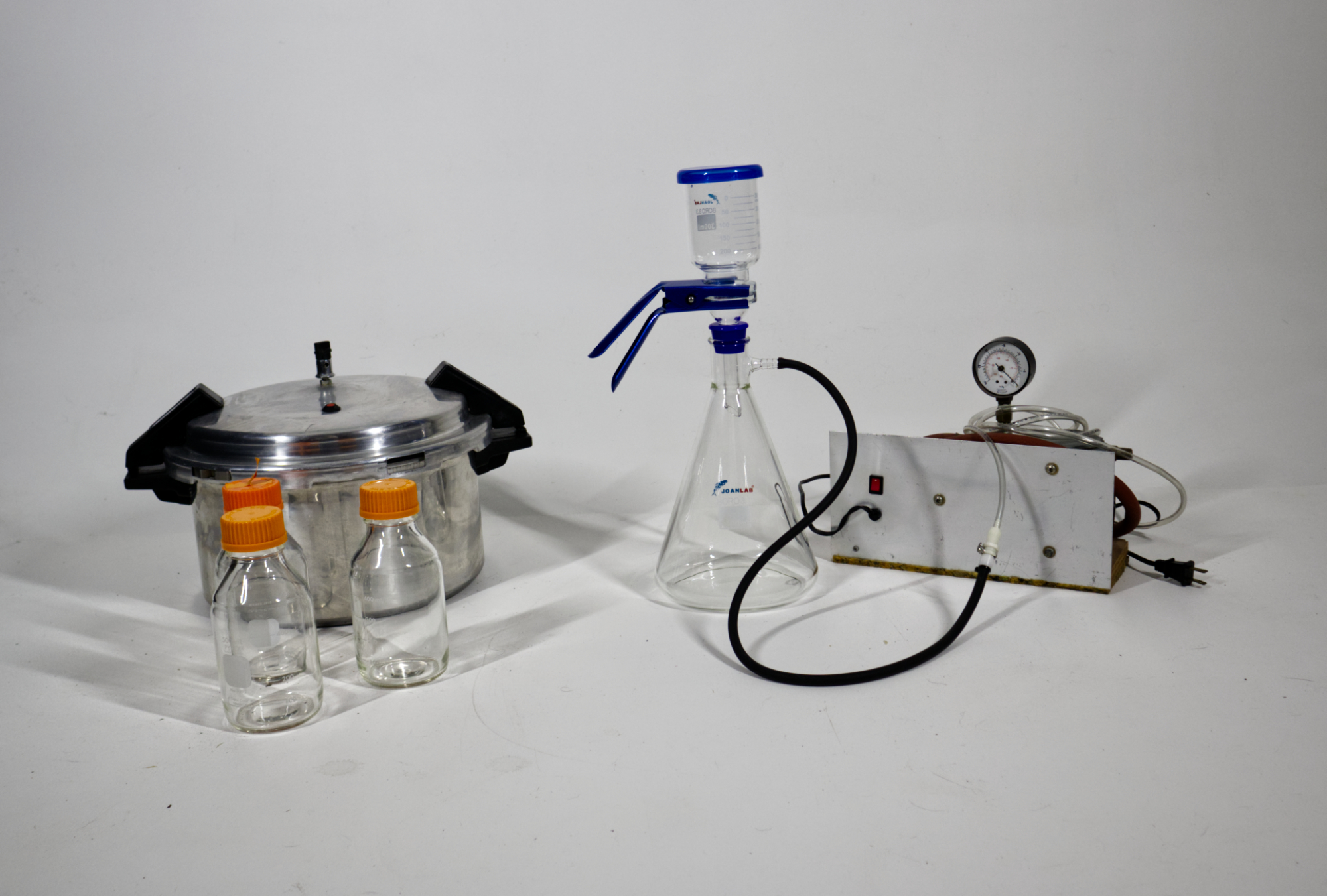
I’ll be using two vacuum filter apparatus with 20 micron filters that I’ll replace every 1000 mL.
Because my autoclave (pressure cooker) is only 8 inches high, I’m limited to four 500 mL bottles.
I plan on using the same pressure cooker to sterilize the soil I’ll collect to plant the seagrass rhyzomes in.
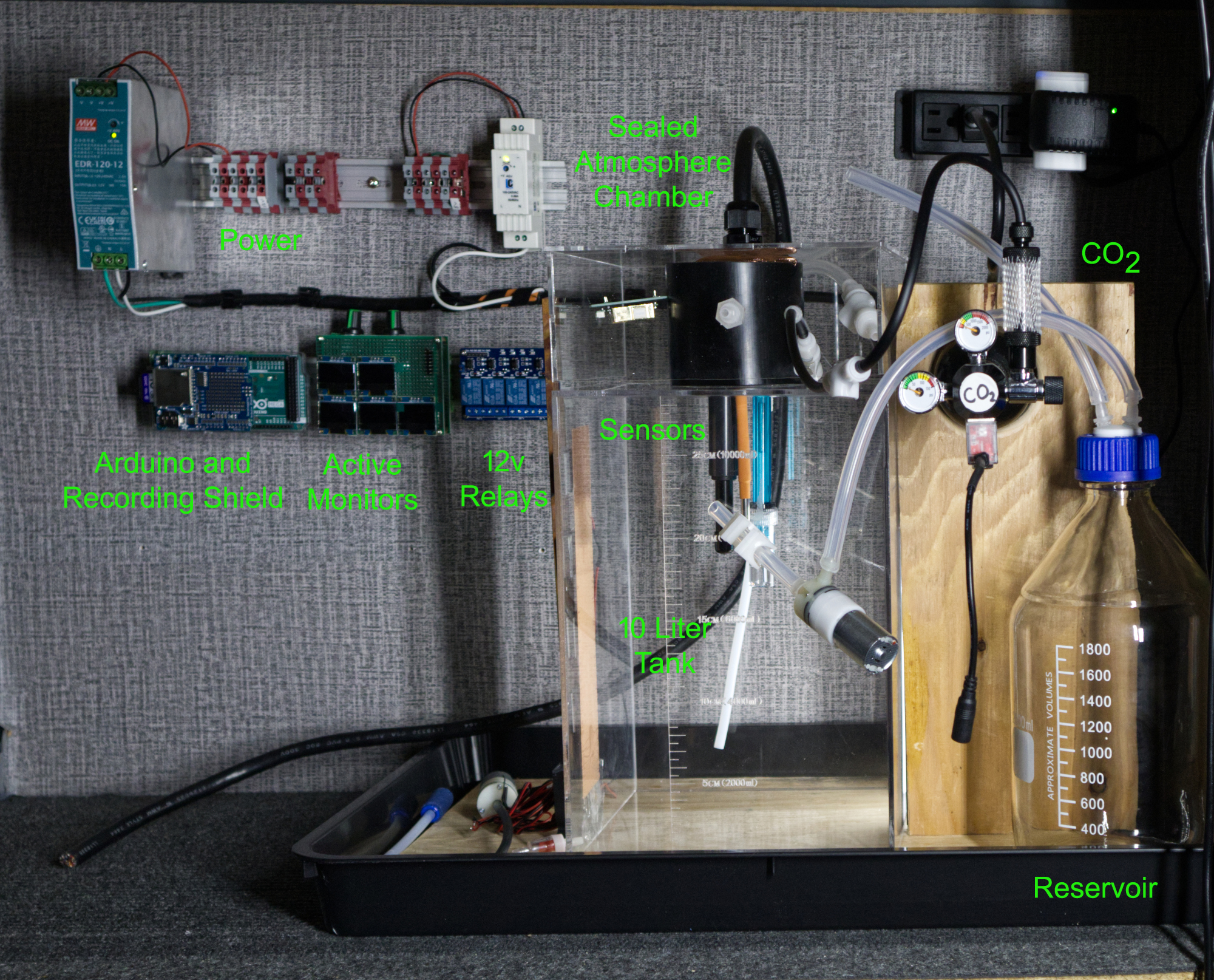
The project began with the idea of monitoring the CO2 uptake of eelgrass (Zostera Marina) as it grows. It has since expanded to monitoring much more than CO2 and has become a true bioreactor for controlling any parameter necessary in seawater.
The experiment is done in a rack in my garage. That gives me some ability to limit stray light and keeps it cool enough that my peltier cooler doesn’t have to work too hard.
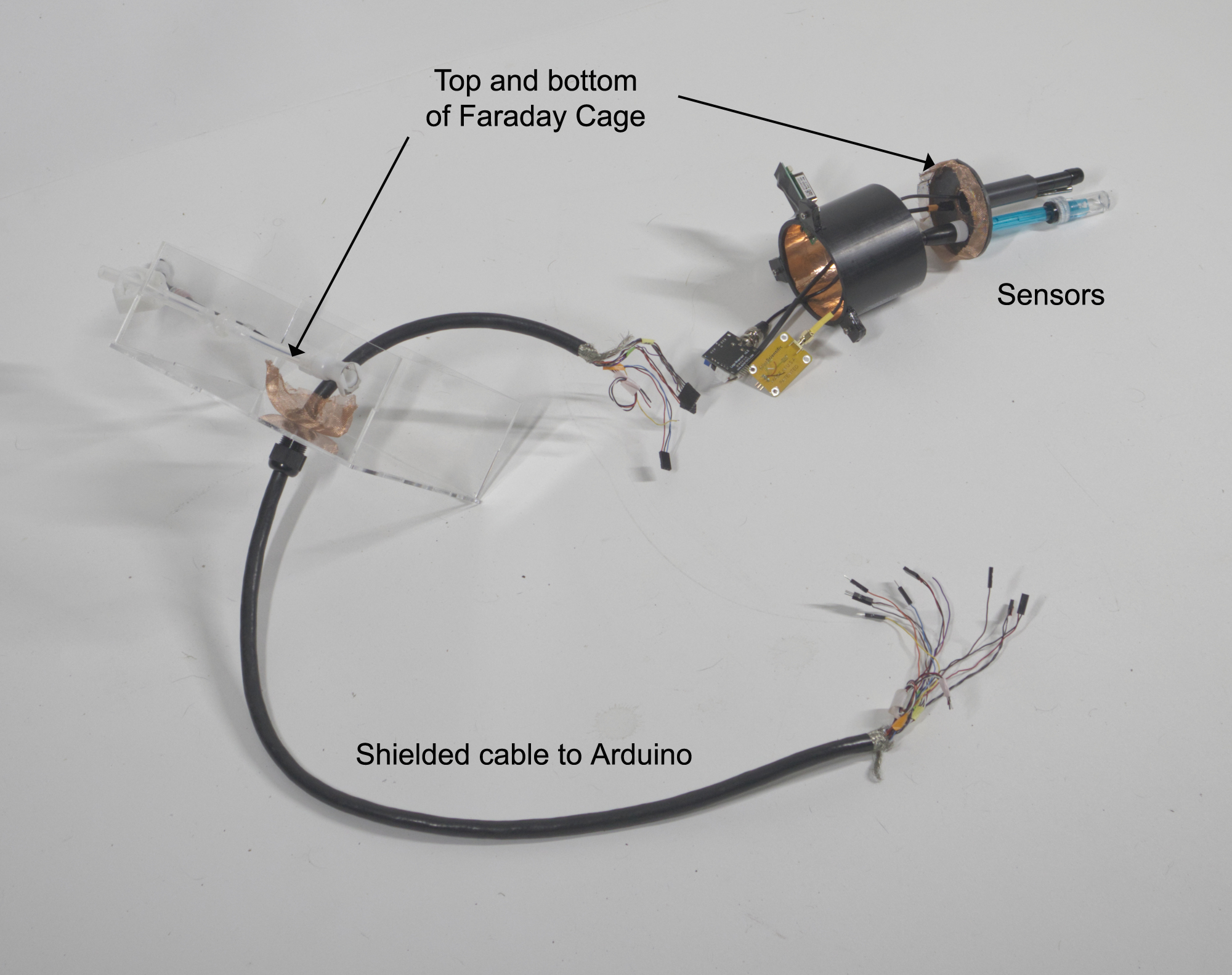
I decided to enclose the sensor’s connections to their instumentation amplifiers in a 4″ diameter ABS pipe. I did this for a couple of reasons: First, the sea air in the atmospheric chamber will be corrosive and second, I needed to isolate the sensor signals from the electromagnetic interference (EMI) that the selenoids, pump motors and relays would create.
The inside of the 4″ ABS sensor block is lined with copper tape which will be grounded to act as sheilding from any outside interference with the signal. The amplified signal is then fed to an Arduino MEGA by a shielded cable wich is also grounded.
The reservoir and water pump system has quick release connections that allow me to siphon off samples using a 150 mL syringe to test nitrate levels, salinity, and to calibrate the sensors.
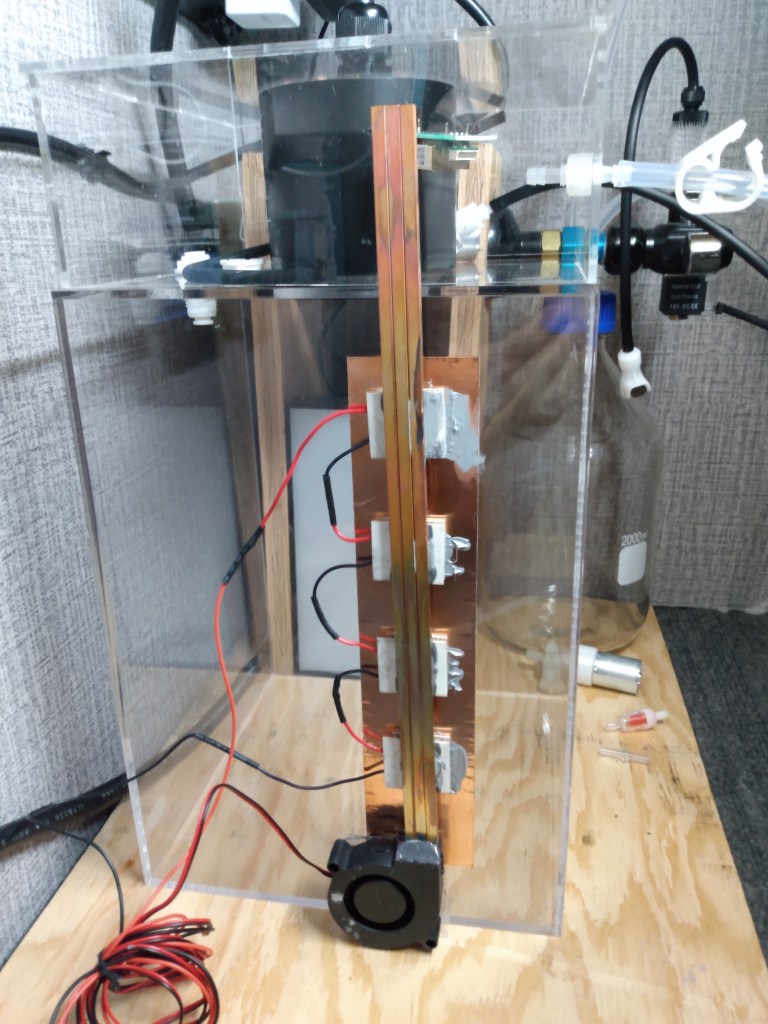
The Peltier cooling of the water uses 4 Marlow Peltier devices. They work best at 3 vots and 6 amps of power. The DIN rail power supply is 12 volts and 10 amps. I’ve run the peltiers in series so the voltage divides into 3 volts each. The fans, pump motors and actuator for the CO2 are connected in parallel and should lower the power reaching the Peltier devices to about 8 amps (untested).
It works incredibly well but I still plan on adding a secondary cooling unit to the back of those pipes you see that the blower pushes air through.
Most of the bioreactor can’t be autoclaved so I’m using a UV wand I built during COVID for a lot of the santization.
In my study of the littoral environment in Southern Puget Sound, I was struck by how few land use or environmental remediation plans consider eelgrass (Zostera Marina) fields. The liturature on the ability of these fields to sequester carbon is mixed but I think the studies being done in warmer climates show the least favorable results.
In late April 2024 I decided that rather than study the soils under eelgrass to see how much in situ sequesterd carbon there was, I’d test the uptake of CO2 in the lab (in vitro) over it’s life cycle.
The nature of the experiment was to have enclosed marine and atmosphic environments where I could introduce CO2 into the atmosphere. I would use UV light to sterilize an eelgrass rhyzome and grow it using sterile seawater and a sterile atmosphere. Then, I would introduce and monitor the CO2 in the air and the pH in the water to measure the dynamics of CO2 uptake (assuming there wasn’t anyting else with chlorophyl in it). I figured I’d have to grow a lot of eelgrass before I figured out how to get the experiment to work but that every failure would be an opportunity to learn more.
I made a series of instructional videos for a handful of Middle School students during the pandemic. I was told they were useful but I was never aske to make any more.
In order to hear progressions in a chord that I haven’t heard before, it’s useful to mix music the way Private Label wineries do with wines they didn’t create. As long as the tempo and key are the same, I’ve created sounds that give me ideas.
I can’t claim these as anything but plagiarized from four talented Pond5 composers but I’m not familiar with anyone advertising that they use this technique.
The last Hawaiian O’O bird was recorded in 1986. When the person who recorded it rewound the tape to listen to it hours after the bird had flown away, the excited bird immediately flew back expecting to find another of his species.
I wrote this music when I heard that story.
I used an app called KeyFinder to get the key of the bird-song. I used HookTheory to find the most popular chord progressions in that key and output the basic structure to MuseScore to finish it up. Several riffs are purely my own, but I can’t say I actually “composed” anything. It was more like I “put it together”.
My baby brother got his PhD at the University of Oregon in Eugene in Linguistics. He was originally trained as an engineer but since the late 1970’s he’s been recording first speakers, documenting and teaching the Native American language of the Puget Sound region (Lushutseed).
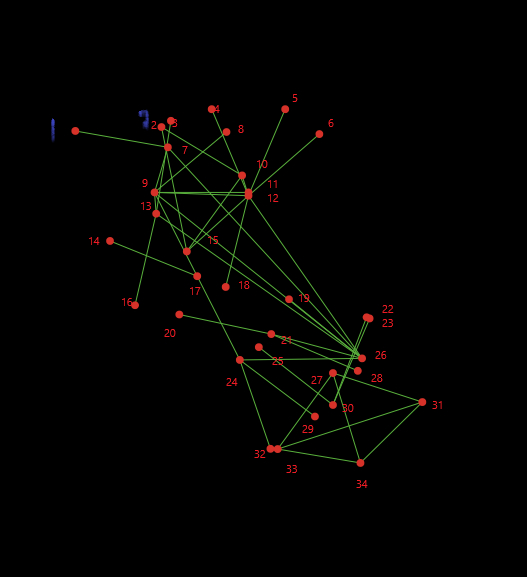
In 2020 we were discussing ways in which tribal language programs could have something other than anecdotal evidence of their impact and landed on Social Network Analysis.
We fielded a survey of Lushootseed speakers asking the to list people they spoke the language with and asking their interlocutors to participate in the survey (called a “name generator” in the parlance of survey design).
Since our initial findings, we’ve taken the idea to a team of professors at the University of Oregon departments of Linguistics and Sociology.
Together, we have received funding from the University to develop a proof of concept for applying these methods to language programs engaged in language revitalization.
The team’s findings are currently (2024) scheduled to be presented to conferences in Scotland and Santa Barbara.
Our first paper targeted beginners in the field in language revitalization programs.
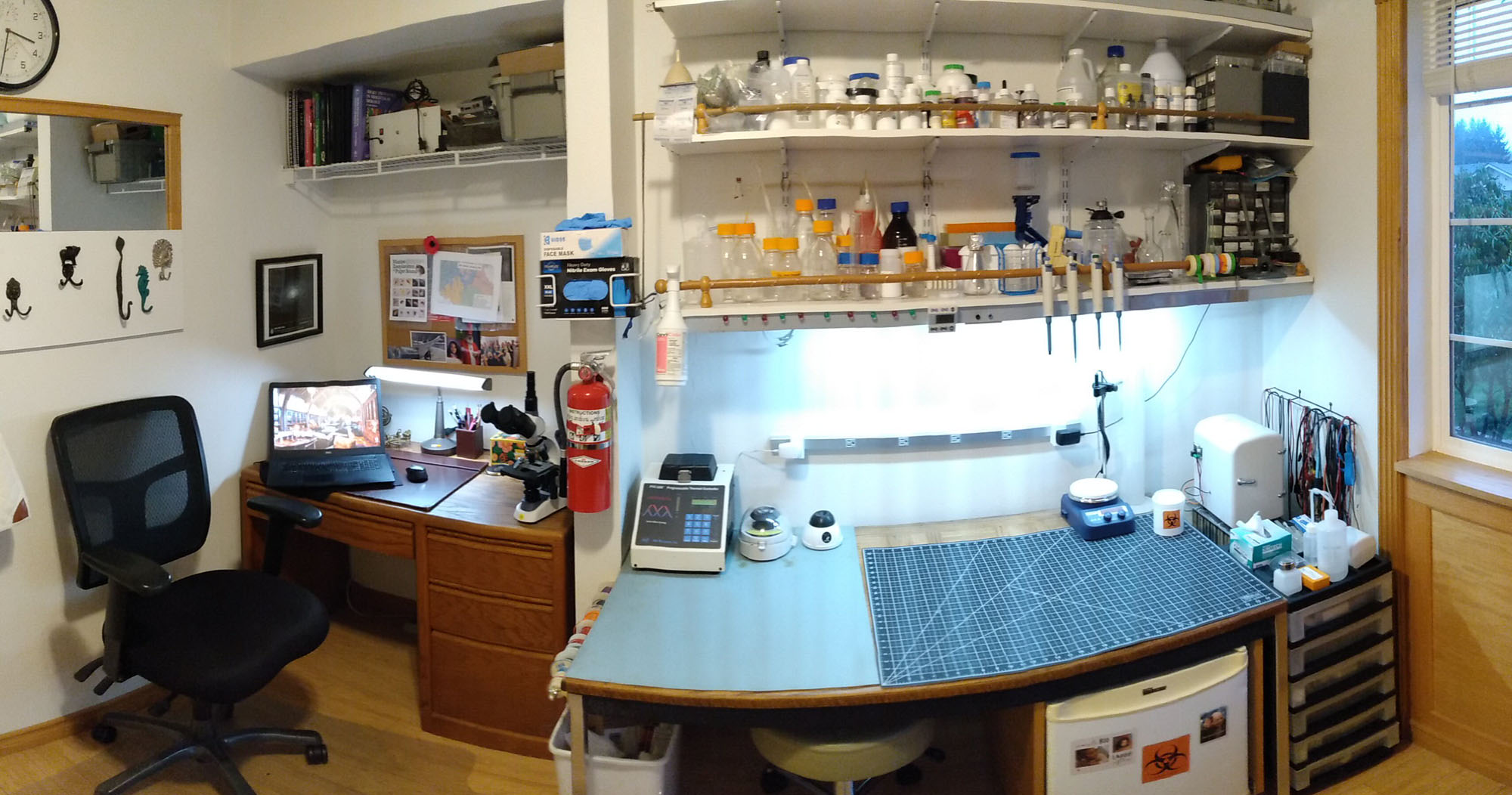
Since it’s completion, I’ve been growing safe strains of e.coli, running gels, mini-preps, PCR and other standard fare for learning basic biological methods. I’m weak on the chemistry so there are a lot of Lewis diagrams in my notebook, but I’m strong on bioinformatics so I enjoy it more and write about it less.
I figure that for every hour I spend seated on the lab stool in a lab coat, I spend 6 hours reading (and re-reading), 2 hours writing in my notebooks at the desk and another hour pounding my head against the white board trying to figure out why my experiments failed.

 jzahir
Recent Comments